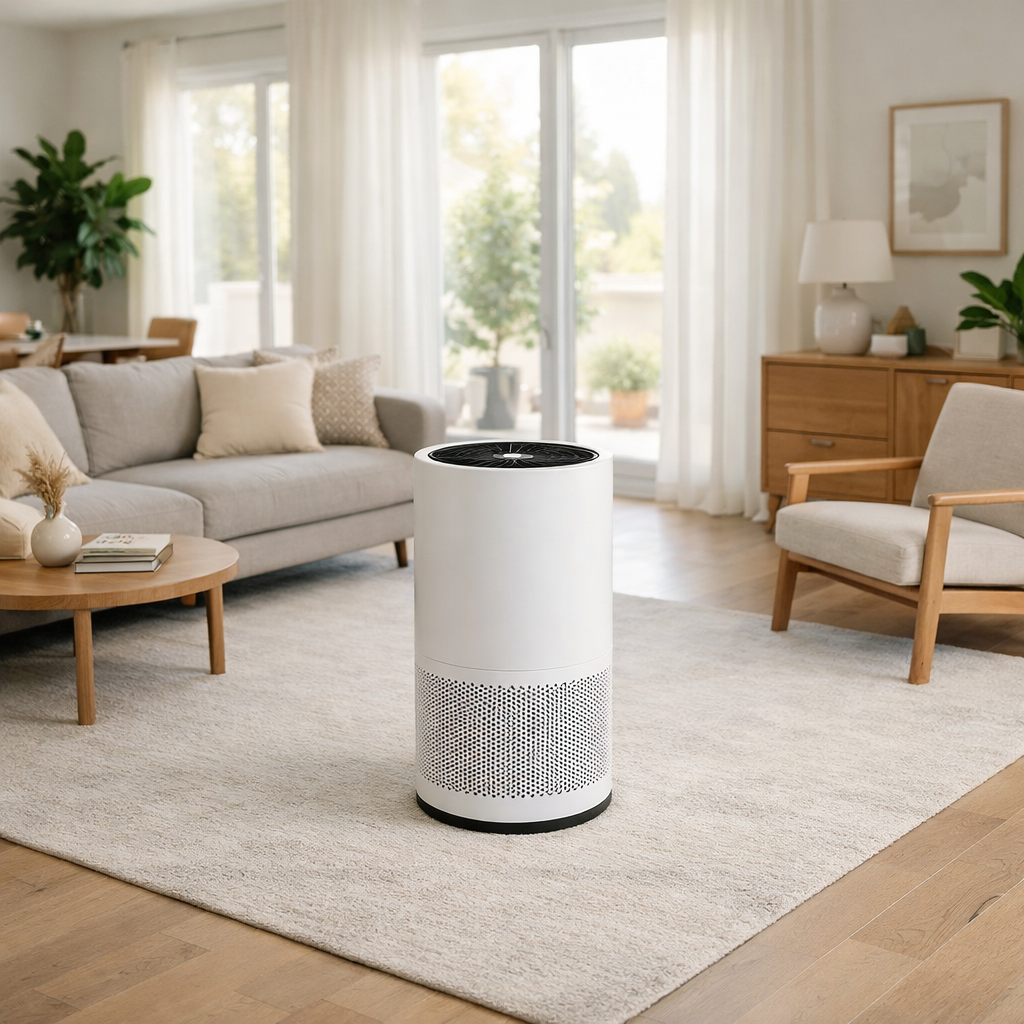
Where to Place Your Air Purifier for Maximum Effectiveness
Buying a high-quality air purifier is only half the battle—where you place it in your home significantly impacts how well it works. Even the most advanced air purifier will struggle to clean your air effectively if positioned incorrectly. In this guide, we will explain the science behind air purifier placement and share expert recommendations to help you get the most from your investment.
Why Placement Matters
Air purifiers work by drawing air in, filtering it, and releasing clean air back into the room. This process requires proper air circulation throughout the space. If your unit is stuck in a corner, behind furniture, or too far from where you spend most of your time, it simply will not clean the air efficiently.
The key principle is this: your air purifier needs to be able to draw air from throughout the room and circulate clean air back out. This requires adequate space around the unit and strategic positioning relative to your activities and pollution sources.
Optimal Locations for Air Purifiers
Bedroom Placement
For most people, the bedroom is the most important room for air purification. You spend 6-8 hours sleeping there, and clean air can significantly improve sleep quality, reduce allergies, and help you wake up feeling refreshed.
The ideal bedroom placement:
- Position the unit 6-10 feet from the head of your bed
- Keep it at least 6 inches away from walls and furniture
- Place it near the room primary air source (doorway or vent)
- Avoid positioning directly next to your bed where you might feel drafts
This distance provides optimal clean air delivery without creating uncomfortable airflow directly on you while sleeping. The 6-10 foot range allows the purified air to reach your breathing zone while the unit continues cycling air from the entire room.
Central Room Placement
When purifying a common living area, place your air purifier in a central location where it can draw air from multiple directions. A central spot allows the unit to capture airborne particles from throughout the room more efficiently than a corner placement.
Best practices for central placement:
- Choose a location with at least 2-3 feet of clearance on all sides
- Elevate the unit slightly (avoid placing directly on thick carpets)
- Ensure nothing blocks the air intake or output vents
- Keep away from curtains or drapes that might impede airflow
Near Pollution Sources
For maximum effectiveness, position your air purifier near the primary sources of air pollution in your home. This strategy captures contaminants before they spread throughout the room.
Ideal placements near pollution sources:
- Near kitchen cooking areas (but not directly over stovetop)
- Close to pet bedding or favorite resting spots
- Near entryways to capture outdoor pollutants
- Adjacent to areas where you vacuum or clean
Places to Avoid
Corners and Confined Spaces
Never place your air purifier in a corner or against a wall. This severely limits the unit ability to draw air from all sides, reducing its effectiveness by up to 50%. The restricted airflow creates dead zones where polluted air simply circulates without being filtered.
Behind Furniture
Placing an air purifier behind sofas, chairs, or large furniture pieces blocks airflow and prevents proper circulation. The clean air gets trapped behind furniture while the area in front remains poorly purified.
Near Humidity Sources
Avoid placing your air purifier directly next to bathrooms, kitchens, or humidifiers. Excess moisture can overwhelm the filters, promote mold growth within the unit, and reduce filter effectiveness. If you must use an air purifier in a humid room, ensure proper ventilation.
On the Floor in High-Traffic Areas
While floor placement is common, avoid high-traffic areas where the unit might get kicked, tripped over, or have air circulation blocked by constant movement. Elevated placement on a table or shelf often works better, as warm air rises and cleaner air distributes more effectively.
Room-Specific Guidelines
Bedrooms
As discussed, bedroom placement prioritizes sleep quality. Consider units with sleep mode and low noise levels. Position to avoid direct drafts on your bed while ensuring clean air reaches your sleeping area.
Living Rooms
Living rooms typically have the most air circulation and multiple pollution sources. Central placement works best, ideally near the center of the longest wall or in an open area away from furniture obstruction.
Kitchens
Kitchens present unique challenges due to cooking odors, grease particles, and humidity. Place your air purifier at least 10 feet from the stove to avoid grease buildup on filters, but close enough to capture cooking odors. Ensure good ventilation in the kitchen itself.
Home Offices
With more people working from home, office air quality matters. Place your air purifier near your desk but not directly in your line of sight to avoid distraction. This helps filter dust from HVAC systems and any paper or cleaning-related particles.
Nurseries and Children Rooms
Children rooms benefit greatly from air purification, especially for infants and toddlers who breathe more rapidly and are more vulnerable to pollutants. Place the unit away from the crib or bed to avoid direct airflow on the child, but close enough to ensure clean air reaches them.
Multiple Air Purifiers
For larger homes or particularly challenging air quality situations, using multiple air purifiers may be necessary. Here is how to optimize multi-unit placement:
- Place one unit in the bedroom (where you spend the most time)
- Add a second unit in the main living area
- For open floor plans, one larger unit can often suffice
- For multi-story homes, consider one unit per floor
Running one air purifier in a 2,000 square foot home will provide much less effectiveness than running two units in 1,000 square foot zones.
Advanced Tips for Maximum Effectiveness
Consider Airflow Patterns
Understanding how air moves in your room helps optimize placement. In most rooms, air tends to circulate in circular patterns. Place your unit to work with these natural patterns rather than against them.
Use Fans Strategically
Ceiling fans or oscillating fans can help distribute purified air throughout the room more effectively. However, avoid directing fans directly at the air purifier intake, as this can interfere with the unit airflow.
Close Doors and Windows
For best results, run your air purifier with doors and windows closed. Open windows introduce continuous new pollutants that the unit must constantly combat, reducing overall effectiveness.
Run Continuously
Air purifiers work best when run continuously at lower speeds rather than intermittently at high speeds. Continuous operation maintains consistent air quality and allows the unit to address pollutants as they appear.
Common Mistakes to Avoid
- Moving the unit only when you remember: Consistency is key—run it continuously for best results
- Placing too close to walls: Always maintain proper clearance
- Ignoring filter maintenance: Clogged filters reduce efficiency regardless of placement
- Expecting instant results: It takes time to filter all the air in a room; be patient
- Using in isolated rooms with doors open: Close doors to contain purified air
Summary: Quick Placement Checklist
- ✓ Place in the room where you spend the most time
- ✓ Keep 6-12 inches away from walls and furniture
- ✓ Ensure 2-3 feet of clearance on all sides
- ✓ Position 6-10 feet from your bed in bedrooms
- ✓ Avoid corners, behind furniture, and high-humidity areas
- ✓ Place near pollution sources when possible
- ✓ Keep away from direct sunlight and heat sources
- ✓ Ensure easy access to power outlet
Final Thoughts
Proper air purifier placement can mean the difference between mediocre and exceptional air quality results. By following these guidelines—central positioning, adequate clearance, proximity to primary breathing zones, and strategic placement near pollution sources—you will maximize your air purifier effectiveness and enjoy cleaner, healthier air throughout your home.
Remember that placement optimization is ongoing. As your daily routines change or seasons shift your pollution sources, you may need to adjust your unit location for optimal performance. Take time to experiment with positioning to find what works best in your unique home environment.
With proper placement and consistent use, your air purifier will significantly improve your indoor air quality, helping you breathe easier, sleep better, and live healthier.