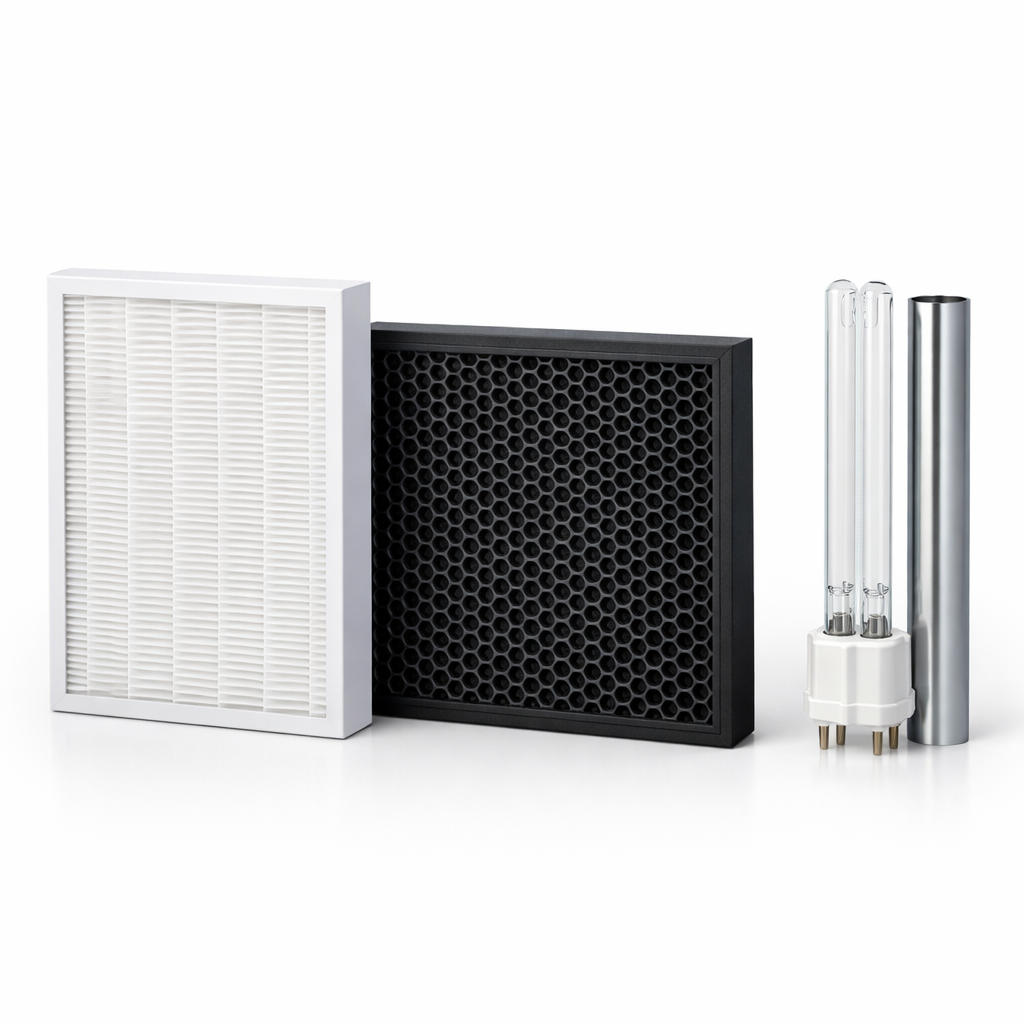
Air Purifier Filters Explained – HEPA, Carbon, UV
Understanding air purifier filters is essential when choosing the right air purification system for your home. With so many filter types and technologies available, it can be overwhelming to determine which one best meets your needs. In this comprehensive guide, we will break down the three most common filter types—HEPA, activated carbon, and UV—and help you understand how each works and which situations they best address.
The Basics of Air Filtration
Before diving into specific filter types, it is important to understand how air purifiers work. Most residential air purifiers use one or more filtration technologies to remove contaminants from indoor air. The main categories include mechanical filtration (trapping particles in filter material), adsorption (trapping gases and odors on surfaces), and germicidal technologies (killing or neutralizing microorganisms).
Most quality air purifiers combine multiple technologies for comprehensive air cleaning. Understanding each type helps you make an informed decision based on your specific air quality concerns.
HEPA Filters: The Gold Standard
What is HEPA?
HEPA stands for High-Efficiency Particulate Air. Originally developed during World War II to protect laboratory workers from radioactive particles, HEPA filters have become the gold standard for air filtration. A true HEPA filter must meet strict government standards, capturing at least 99.97% of particles that are 0.3 microns in diameter or larger.
To put this in perspective, a human hair is about 70 microns in diameter, while many allergens like dust mite debris, pollen, and pet dander range from 1-20 microns. HEPA filters effectively capture these common irritants, as well as smaller particles like smoke and some bacteria.
How HEPA Filters Work
HEPA filters use a combination of three mechanisms to capture particles:
- Interception: As air flows through the filter, particles traveling close to filter fibers stick to them
- Impaction: Larger particles cannot follow the airstream around fibers and are forced into direct contact with them
- Diffusion: The smallest particles collide with gas molecules, causing them to slow down and become easier to capture
What HEPA Filters Capture
HEPA filters are highly effective at removing:
- Dust and dust mite debris
- Pollen from plants and trees
- Pet dander and fur
- Mold spores
- Smoke particles
- Some bacteria and viruses (attached to particles)
HEPA Filter Pros and Cons
Pros:
- Excellent particle removal efficiency (99.97%)
- No harmful byproducts or ozone
- Mechanical filtration is safe and effective
- Relatively low maintenance (simple filter replacement)
Cons:
- Does not capture gases, fumes, or odors
- Filters eventually need replacement (typically 6-12 months)
- Initial cost can be higher than basic models
Activated Carbon Filters: Tackling Odors and Chemicals
How Activated Carbon Works
While HEPA filters excel at capturing solid particles, they cannot remove gases, volatile organic compounds (VOCs), or odors. This is where activated carbon filters come in. Activated carbon (also called activated charcoal) is treated to create millions of tiny pores that increase its surface area dramatically.
One pound of activated carbon has a surface area equivalent to about 10 acres. This vast surface allows the carbon to adsorb (not absorb) gas molecules onto its surface. When odorous or harmful gases pass through the filter, they bond to the carbon and remain trapped.
What Activated Carbon Filters Remove
Activated carbon is particularly effective at capturing:
- Cooking odors
- Pet odors
- Smoke smells
- Volatile organic compounds (VOCs) from paints, cleaners, and new furniture
- Formaldehyde
- Chemical fumes
Carbon Filter Considerations
Not all carbon filters are created equal. Higher-quality carbon filters use more carbon and have better adsorption capacity. Look for these indicators:
- Weight: Heavier filters typically contain more carbon
- Depth: Thicker filters provide more contact time for adsorption
- Type: Coconut shell carbon is often considered superior to coal-based carbon
Unlike HEPA filters that simply fill with particles, activated carbon becomes full as its adsorption sites are occupied. In households with significant odor or chemical concerns, carbon filters may need replacement more frequently.
UV-C Light Technology: Germicidal Protection
How UV Air Purifiers Work
UV (ultraviolet) air purifiers use specific wavelengths of UV light, particularly UV-C (around 254 nanometers), to damage the DNA and RNA of microorganisms. This disruption prevents them from reproducing, effectively neutralizing bacteria, viruses, mold spores, and other pathogens.
It is important to note that UV-C light does not physically capture particles like HEPA. Instead, it exposes airborne microorganisms to germicidal radiation as air passes through the unit. This makes UV an excellent complement to mechanical filtration but should not be relied upon as the sole purification method.
What UV Filters Address
UV technology is particularly effective against:
- Bacteria (including antibiotic-resistant strains)
- Viruses and flu pathogens
- Mold and mildew spores
- Allergens from dust mites (by killing allergen-producing organisms)
Benefits and Limitations of UV
Benefits:
- Can neutralize airborne pathogens
- No filter media to replace (usually just the UV bulb)
- Continuous disinfection as air passes through
- Odorless operation
Limitations:
- Only effective on organisms exposed to UV light
- Does not remove particles, allergens, or odors
- Requires proper exposure time to be effective
- Some organisms have repair mechanisms to recover from UV damage
Combination Systems: The Best Approach
For comprehensive air purification, most experts recommend choosing a system that combines multiple technologies. The ideal setup typically includes:
Three-Stage Filtration
Many quality air purifiers now feature three-stage systems:
- Pre-filter: Captures large particles like hair and dust bunnies, extending the life of main filters
- HEPA filter: Removes fine particles, allergens, and irritants
- Activated carbon layer: Eliminates odors, gases, and VOCs
Advanced Four-Stage Systems
Premium models often add a fourth stage:
- UV-C light: Provides germicidal protection against bacteria and viruses
- Plasma or Ion generation: Helps aggregate particles for easier capture
- Catalytic filter: Breaks down formaldehyde and other chemicals
Choosing the Right Filter Combination
The best filter combination for you depends on your specific concerns:
For Allergy Sufferers
If your primary concern is allergies, True HEPA filtration is essential. Look for HEPA-certified filters to ensure you are getting effective allergen removal. Adding a pre-filter helps extend HEPA filter life by capturing larger particles first.
For Pet Owners
Pet owners benefit from both HEPA (for dander) and activated carbon (for pet odors). A combination system addresses both airborne allergens and the smells that come with furry friends.
For Smoke and Chemical Concerns
If you are dealing with smoke, VOCs, or chemical sensitivities, look for models with substantial activated carbon filters. Some manufacturers offer enhanced carbon filters specifically designed for smoke and chemical removal.
For Germ Protection
While UV technology provides additional protection against pathogens, it works best as a supplement to HEPA filtration. Do not choose a UV-only system—look for combination units that include both mechanical filtration and UV-C light.
Maintaining Your Filters
Proper filter maintenance is crucial for continued effectiveness:
- HEPA filters: Replace every 6-12 months, depending on usage and air quality
- Pre-filters: Many are washable; clean monthly or as directed
- Carbon filters: Replace every 3-6 months in high-odor environments
- UV bulbs: Replace annually or when indicated by the manufacturer
Conclusion
Understanding the different filter types helps you choose an air purifier that addresses your specific needs. For most households, a combination system featuring True HEPA filtration for particles plus activated carbon for odors and VOCs provides comprehensive air cleaning. UV technology adds an extra layer of germ protection, particularly beneficial for households with immune-compromised members or during cold and flu season.
Invest in quality filtration from the start—your lungs will thank you. Look for certified HEPA filters and substantial carbon layers, and maintain your system according to manufacturer recommendations for years of clean, healthy air.