How Often Should You Replace Your Air Purifier Filter? The Complete Guide
One of the most important aspects of maintaining your air purifier is knowing when to replace the filter. A worn-out or clogged filter cant effectively clean your air, and in some cases, it can even release trapped particles back into your home. In this guide, well cover everything you need to know about air purifier filter life, signs its time for a replacement, and tips for extending filter lifespan.
How Long Do Air Purifier Filters Last?
The lifespan of your air purifier filter depends on several factors, including:
- Usage frequency
- Indoor air quality
- Type of pollutants in your home
- Filter quality and type
- Manufacturer specifications
General Guidelines
As a general rule of thumb:
- True HEPA filters: 6-12 months
- Activated carbon/pre-filters: 3-6 months
- Combination filters: 6-12 months
Factors That Affect Filter Life
1. Usage Patterns
Running your air purifier continuously will naturally wear out the filter faster than occasional use. However, continuous operation is often recommended for allergy and asthma sufferers, so this is a worthwhile trade-off.
2. Indoor Air Quality
If you live in an area with poor air quality, high pollen counts, or near industrial zones, your filter will accumulate particles more quickly. Homes with pets or smokers will also need more frequent filter changes.
3. Household Activities
Cooking, cleaning, burning candles, and smoking indoors can all contribute to faster filter degradation. If you frequently engage in these activities, plan to check your filter more often.
4. Pet Ownership
Pet dander, fur, and hair can quickly clog filters. If you have one or more pets, especially ones that shed heavily, you may need to replace your HEPA filter every 3-6 months.
5. Filter Quality
Genuine manufacturer filters typically last longer than generic alternatives. While generics may be cheaper upfront, they often have shorter lifespans and may not filter as effectively.
Signs Its Time to Replace Your Filter
Visual Indicators
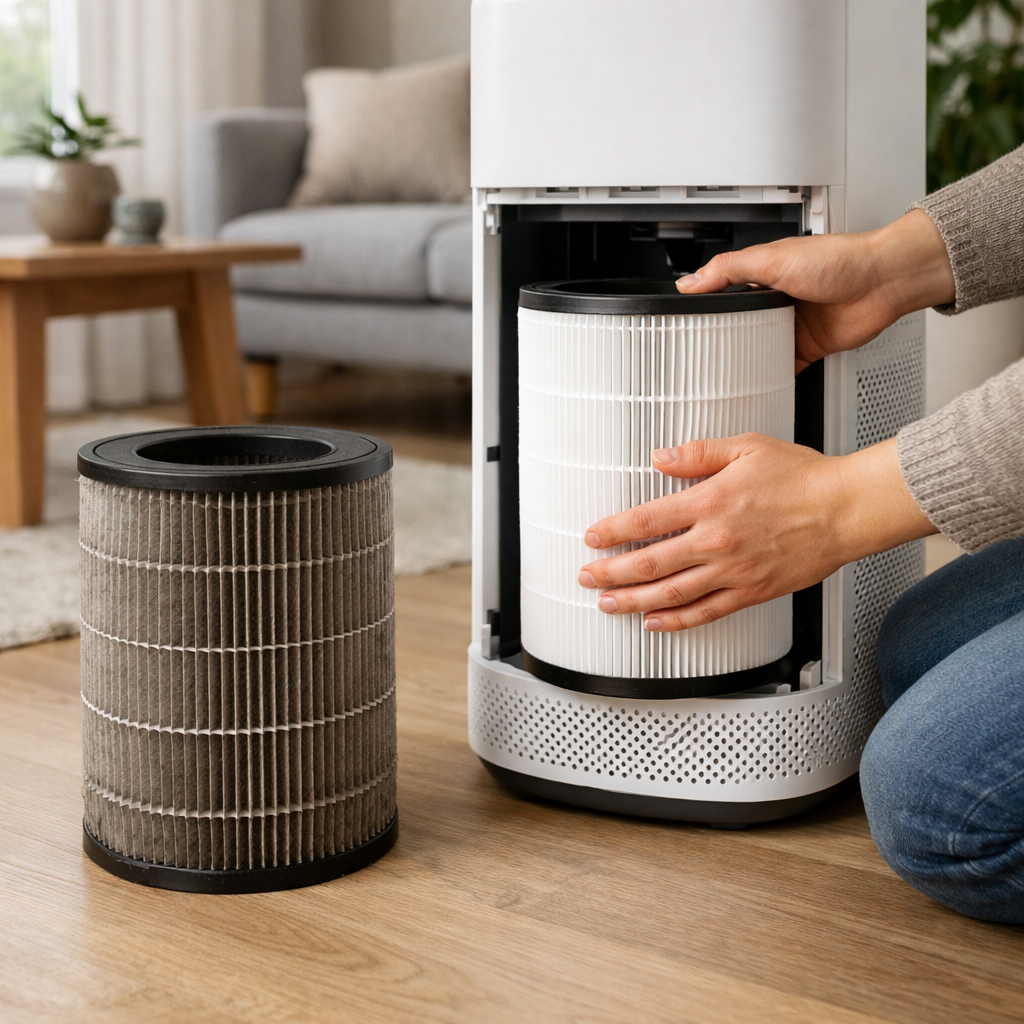
- Visible dirt and debris: If the filter looks dark, gray, or clogged with visible particles, its time for a change.
- Deformed or damaged filter: Any signs of damage, tears, or deformation means immediate replacement.
- Discoloration: Significant darkening or staining indicates the filter has trapped many particles.
Performance Indicators
- Reduced airflow: If you notice weaker air flow from your purifier, the filter is likely clogged.
- Unusual odors: A musty or stale smell from the purifier indicates trapped contaminants are building up.
- Allergy symptoms worsen: If your allergies seem worse when the purifier is running, the filter may be saturated.
- Longer purification time: The air takes noticeably longer to feel fresh.
Smart Features
Many modern air purifiers have filter change indicators that track usage and alert you when its time for replacement. If your model has this feature, pay attention to these notifications—theyre based on actual usage patterns.
Filter Types and Their Lifespans
True HEPA Filters
Average lifespan: 6-12 months
True HEPA filters are the gold standard for air purification. They capture 99.97% of particles as small as 0.3 microns. The high-efficiency filtration means they accumulate particles quickly, especially in busy households.
Activated Carbon Filters
Average lifespan: 3-6 months
Activated carbon filters absorb odors, gases, and volatile organic compounds (VOCs). They become saturated over time and lose effectiveness. Some units have washable carbon filters that can be reused.
Pre-Filters
Average lifespan: 3 months (or washable)
Pre-filters catch large particles like hair and lint, protecting the more expensive HEPA filter. Many pre-filters are washable and reusable, saving you money.
HEPA-Type Filters
Average lifespan: 6-8 months
HEPA-type filters are less expensive alternatives to True HEPA. They typically capture 99% of particles (vs. 99.97% for True HEPA) and may need more frequent replacement.
Popular Air Purifier Filter Replacement Schedules
| Air Purifier Model | HEPA Filter | Carbon/Pre-Filter |
|---|---|---|
| Honeywell HPA300 | 6-12 months | 3 months |
| Levoit Core 400S | 6-8 months | 3-6 months |
| Levoit Core 300S | 6-8 months | 3-6 months |
| Winix 5500H2 | 6-12 months | Washable |
| Coway AP-1512HH | 6-12 months | 6 months |
| Dyson Purifiers | 12 months | 12 months |
How to Extend Filter Life
1. Run at Lower Speeds
Using your air purifier on lower fan speeds puts less strain on the filter and extends its life. Reserve higher speeds for situations when you need rapid purification.
2. Keep Windows Closed
Running your purifier with windows open allows continuous influx of outdoor pollutants, forcing the filter to work harder. Keep windows closed, especially during high pollen seasons or high pollution hours.
3. Vacuum and Dust Regularly
Reducing the overall particle load in your home means your filter doesnt have to work as hard. Regular vacuuming and dusting complement your air purifiers work.
4. Use Pre-Filters
If your air purifier has a washable pre-filter, use it! It catches large particles first and can be cleaned regularly, extending the life of your main HEPA filter.
5. Maintain Proper Humidity
Keeping indoor humidity between 30-50% reduces the workload on your filter. High humidity can also promote mold growth, adding to the filters burden.
6. Dont Block Airflow
Ensure your air purifier has adequate space around it for proper air intake and exhaust. Blocked airflow forces the unit to work harder.
What Happens If You Dont Replace the Filter?
Reduced Air Quality
A clogged filter cant capture new particles effectively. Pollutants will continue circulating in your home, defeating the purpose of the air purifier.
Allergy and Asthma Symptoms May Worsen
If you use an air purifier specifically for allergy or asthma relief, a worn filter means youre not getting the relief you need. In some cases, trapped allergens can even be released back into the air.
Increased Energy Consumption
A clogged filter restricts airflow, making your air purifiers motor work harder. This increases energy consumption and can shorten the units overall lifespan.
Potential Damage to the Unit
In extreme cases, a severely clogged filter can cause the motor to overheat or fail entirely, potentially damaging your air purifier beyond repair.
Unpleasant Odors
A saturated carbon filter can start to emit the very odors it was designed to eliminate, making your indoor air smell worse, not better.
How to Check Your Filter
Follow these steps to inspect your air purifiers filter:
- Turn off and unplug the air purifier
- Locate the filter compartment (usually at the back or bottom of the unit)
- Remove the filter according to manufacturer instructions
- Inspect visually for dirt, damage, or discoloration
- Check the filters flexibility – a healthy filter should be somewhat pliable; if its rigid or brittle, replace it
- Reinstall or replace as needed
Cost Considerations
Filter replacement costs vary by brand and model:
- Generic filters: $10-25
- Brand-name HEPA filters: $25-50
- Premium filters (Dyson, Rabbit Air): $50-100+
While generic filters are cheaper, genuine manufacturer filters are designed specifically for your unit and often provide better filtration and longevity.
Final Recommendations
To ensure optimal air purification performance:
- Check your filter monthly – especially during heavy-use periods
- Set calendar reminders for filter replacement based on manufacturer guidelines
- Invest in genuine filters – theyre worth the extra cost
- Dont ignore the signs – reduced airflow, odors, and worsening allergies all indicate filter problems
- Consider filter change indicators when purchasing a new air purifier
Regular filter maintenance is the key to keeping your air purifier running efficiently and effectively. By staying proactive about replacements, youll enjoy cleaner, healthier air in your home for years to come.