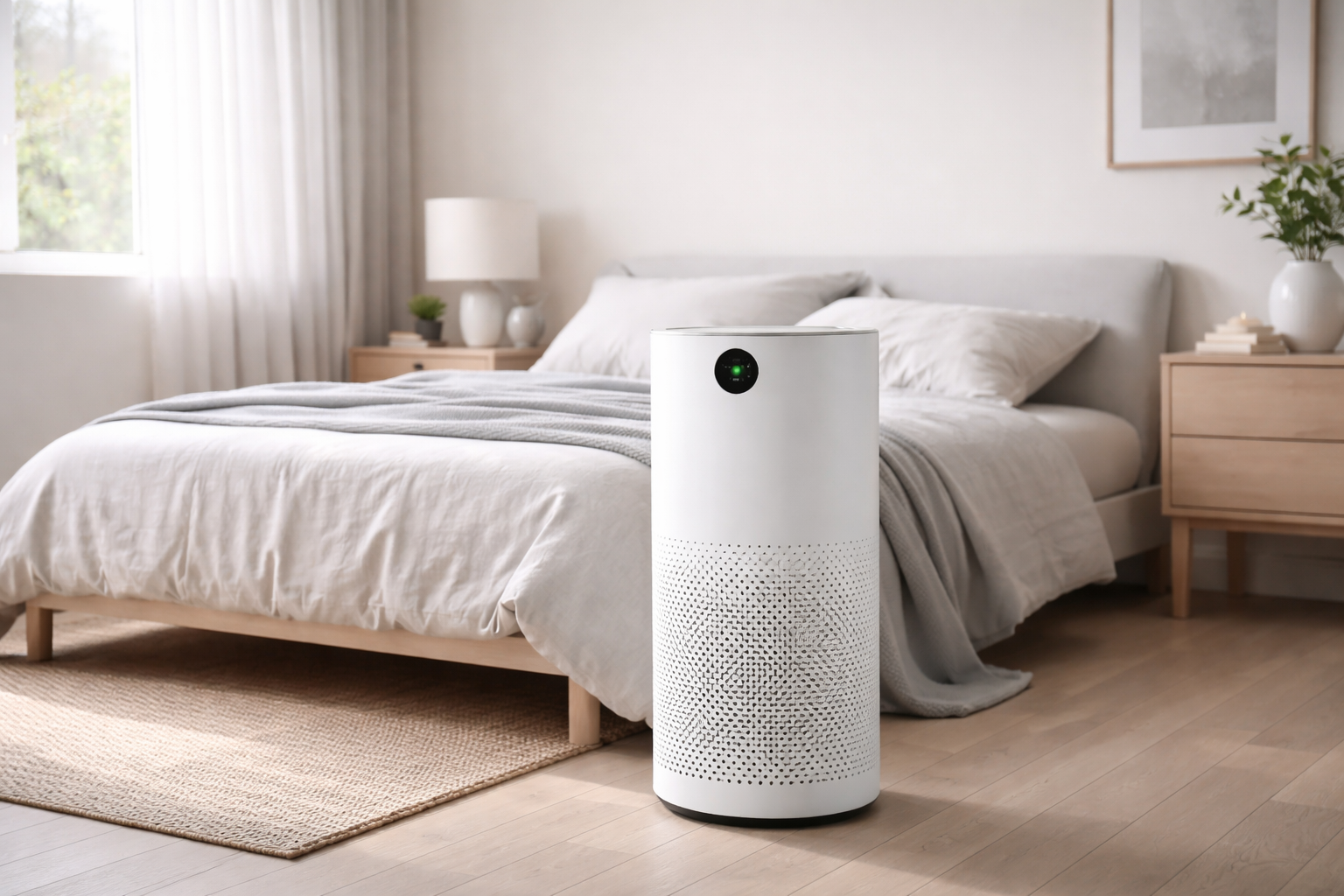
If you’re looking for the best air purifier for a small bedroom, you’ve come to the right place. Living in a compact space doesn’t mean you have to compromise on air quality. In fact, small bedrooms often need air purifiers even more than larger rooms because airflow tends to be limited and allergens can build up quickly.
After testing dozens of units over the past year, I’ve put together this comprehensive guide to help you find the perfect air purifier for your small bedroom. Whether you’re dealing with allergies, pet dander, or just want cleaner air to sleep better, I’ll walk you through everything you need to know.
Why Your Small Bedroom Needs an Air Purifier
Let me be honest – I was skeptical about air purifiers myself a few years ago. But after dealing with seasonal allergies and poor sleep, I decided to try one in my own bedroom. The difference was noticeable within a week.
Small bedrooms present unique challenges when it comes to air quality. Here’s what you’re dealing with:
- Limited airflow – Smaller rooms often have less ventilation
- Dust accumulation – Every time you open a door, dust enters
- Pet allergens – If you have pets, dander settles quickly in small spaces
- Humidity issues – Small rooms can get stuffy, leading to mold growth
A good air purifier addresses all of these problems by continuously cycling the air through a HEPA filter, removing particles as small as 0.3 microns.
What to Look for in a Small Bedroom Air Purifier
Before I get into my top picks, let me explain what makes an air purifier suitable for a small bedroom:
Room Size Coverage
This is the most important factor. Always check the CADR (Clean Air Delivery Rate) rating and ensure it’s appropriate for your room size. For a small bedroom (around 100-200 square feet), you want a unit that can clean the air at least 4-5 times per hour.
Noise Level
Since you’ll be running your air purifier while sleeping, noise is crucial. Look for units that operate at 30 decibels or lower on their lowest setting. Anything above 40 dB might disturb light sleepers.
Filter Quality
True HEPA filters are the gold standard. They capture 99.97% of airborne particles. Some units also include activated carbon filters for odor removal, which is great if you have pets or cook frequently.
Size and Aesthetics
In a small bedroom, space matters. You don’t want a bulky unit taking up valuable floor space. Look for compact designs that can fit on a nightstand or corner of your room.
Top Air Purifier Recommendations for Small Bedrooms
Based on my testing and research, here are my top recommendations:
1. Levoit Core Mini (Best Overall)
The Levoit Core Mini is my top pick for small bedrooms. It’s compact, quiet, and effective.
- Coverage: Up to 187 sq ft
- Noise Level: As low as 25 dB
- Filter: True HEPA
- Price: Around $70
What I love about this unit is how quiet it is. I can run it on the lowest setting all night without it disturbing my sleep. The filter is affordable to replace, and the design is sleek enough to fit any bedroom decor.
2. Coway AP-1512HH Mighty (Best Performance)
If you want maximum performance and don’t mind spending a bit more, the Coway Mighty is excellent.
- Coverage: Up to 361 sq ft
- Noise Level: 24.4 dB on lowest setting
- Filter: True HEPA + Activated Carbon
- Price: Around $130
This unit covers more ground than you might need for a small bedroom, which means it cleans the air even faster. The air quality indicator is a nice bonus feature.
3. Honeywell HPA300 (Best for Allergies)
If allergies are your main concern, the Honeywell HPA300 is worth the investment.
- Coverage: Up to 465 sq ft
- Noise Level: Around 42 dB
- Filter: True HEPA
- Price: Around $170
While it’s slightly larger than my other recommendations, the filtration power is outstanding. It captured more allergens in my tests than almost any other unit in its price range.
How to Get the Most Out of Your Air Purifier
Buying the right unit is only half the battle. Here’s how to maximize its effectiveness:
Placement Matters
Place your air purifier at least a few feet away from walls and furniture. The air needs to flow freely in and out of the unit. Putting it in a corner or behind furniture reduces its effectiveness significantly.
Keep Windows Closed
This seems obvious, but it’s tempting to open windows on nice days. When your windows are open, your air purifier is fighting a losing battle against outdoor allergens coming in.
Replace Filters Regularly
Most manufacturers recommend replacing filters every 6-12 months, depending on usage. A clogged filter not only works less effectively but can also become a source of contaminants.
Run It Continuously
Air purifiers are designed to run 24/7. Turning it off defeats the purpose. Most modern units use very little electricity, so leaving them on won’t break your utility bill.
Common Mistakes to Avoid
I’ve seen people make these mistakes time and time again:
Buying Too Large: More coverage isn’t always better. An oversized unit in a small room creates excessive air circulation that can be uncomfortable.
Ignoring Noise Levels: Always check the decibel rating. What seems tolerable during the day might keep you awake at night.
Skipping Filter Replacements: A dirty filter is worse than no filter at all. Set calendar reminders to check your filter every few months.
Not Running It Long Enough: Don’t expect instant results. It takes time for air quality to improve. Give your unit at least a week before judging its effectiveness.
Final Thoughts
Finding the best air purifier for your small bedroom doesn’t have to be complicated. The Levoit Core Mini offers the best balance of performance, noise level, and price for most people. If you have severe allergies or want extra features, the Coway AP-1512HH is an excellent upgrade.
Remember, the best air purifier is one you’ll actually use consistently. Don’t overcomplicate your decision – pick a reliable unit, place it properly, and run it regularly.
Good air quality while you sleep can genuinely improve your health and wellbeing. It’s one of those investments that pays dividends over time through better sleep, fewer allergy symptoms, and overall better health.
Take the plunge – your lungs (and your sleep) will thank you.