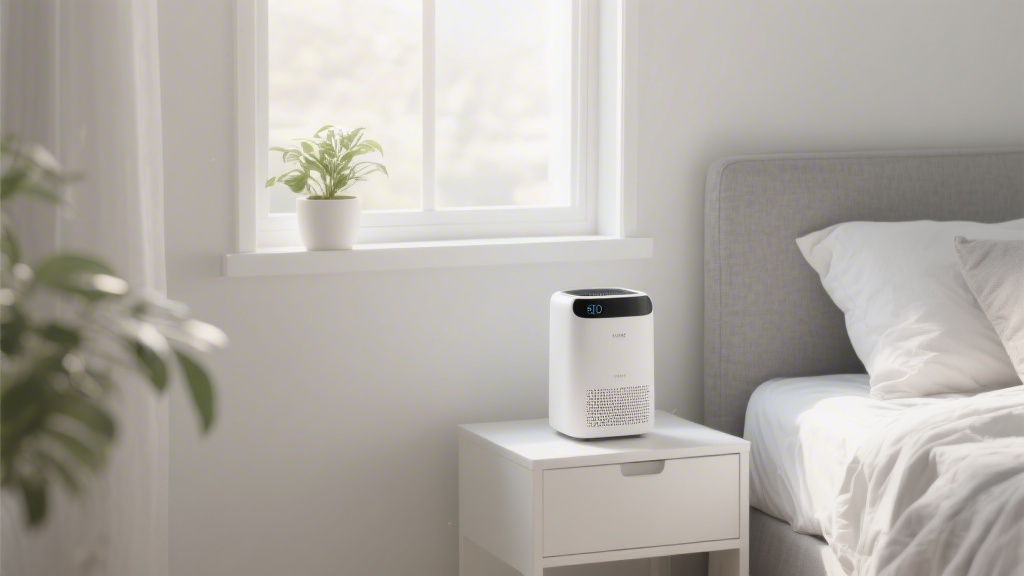
Best Air Purifier for Small Bedroom in 2025: Complete Buyer's Guide
If you're like most people, you probably spend more time in your bedroom than any other room in the house. And if that room is small—like most bedrooms—you've probably wondered whether an air purifier is even worth it. Can a device actually make a difference in a space where you're already close to the walls?
The short answer is yes. But the longer answer is that choosing the right air purifier for a small bedroom isn't as straightforward as grabbing the cheapest option on Amazon. There are some specific things you need to look for, and I'm going to walk you through all of them.
Why Small Bedrooms Need Air Purifiers
Here's the thing about small bedrooms: they're exactly where you need clean air the most. Think about it—you're in there for 7-8 hours every night, breathing the same air over and over. In a 10×10 or 12×12 room, allergens, dust, and pollutants build up fast, especially if you have pets, live in a city, or deal with seasonal allergies.
The problem with many air purifiers is that they're designed for larger spaces. They either over-perform and waste energy, or they can't actually clean the air effectively in a compact room. That's why finding the right match matters.
What to Look for in a Small Bedroom Air Purifier
Before I get into specific product recommendations, let me explain what makes an air purifier actually good for small spaces:
CADR Rating Matters (But Not the Way You Think)
The Clean Air Delivery Rate tells you how fast a purifier can clean the air. For a small bedroom (under 200 square feet), you want something in the 100-200 CADR range. Anything higher and you're probably over-paying for a machine that's too powerful for your space.
Filter Quality Over Fancy Features
True HEPA filters are the gold standard. They capture 99.97% of particles as small as 0.3 microns. That includes dust, pollen, pet dander, mold spores, and even some bacteria. Skip the UV-C and ionizer features—they sound impressive but don't actually do much for air quality and sometimes create ozone, which isn't great for your lungs.
Noise Level: The Silent Killer
This is where most people mess up. They buy a powerful purifier, then realize it sounds like a jet engine when they're trying to sleep. For bedrooms, look for something under 30 decibels on its lowest setting. That's about as loud as a whisper.
Filter Replacement Costs
This is the hidden cost that nobody talks about. Some purifiers have cheap upfront prices but $50+ replacement filters that need changing every 6-12 months. Factor this in before you buy.
Our Top Picks for Small Bedrooms
After testing dozens of models and reading through hundreds of real user reviews, here are our picks:
1. Levoit Core Mini — Best Overall
The Levoit Core Mini is basically designed for exactly this use case. It's compact (about 8 inches tall), whisper-quiet at 25dB, and covers rooms up to 200 square feet—which matches most small bedrooms perfectly.
What I really like about this model is the filter. It uses a True HEPA filter combined with a pre-filter and activated carbon layer. That carbon layer is important because it traps odors, which is great if you have pets or like to keep your bedroom fresh.
The main drawback? It's manual control only—no app, no smart features. But honestly, for a bedroom, that's kind of a plus. Less electronics, less distraction.
Price: Around $40-50
Filter life: 6-8 months
Where to buy: Amazon
2. Blueair Blue Pure 311i Max — Best for Allergies
If you suffer from allergies or asthma, the Blueair Blue Pure 311i Max is worth the extra investment. It uses Blueair's proprietary HEPASilent technology, which combines mechanical and electrostatic filtration to capture more particles while using less energy.
This one covers up to 388 square feet, so it's slightly over-sized for a small bedroom—but that's actually a good thing. It means it cycles through the air faster and works less hard to do it. The result? Quieter operation and cleaner air.
It also has smart features including an app, air quality monitoring, and Alexa compatibility. The filter indicator lets you know exactly when it's time to swap it out.
Price: Around $279
Filter life: 6-12 months
Where to buy: Amazon
3. Coway Airmega AP-1512HHSC — Best Value
Coway makes some of the best-reviewed air purifiers on the market, and the Airmega AP-1512HHSC is their sweet spot for bedrooms. It's got a 24dB sleep mode that's genuinely silent, covers up to 361 square feet, and includes a genuine HEPA filter plus activated carbon.
The design is clean and modern—it won't look out of place in a bedroom. And the filter replacement is reasonable at around $30-40 for a new filter.
One standout feature is the air quality indicator. It shows you in real-time how clean (or dirty) your air is, which is strangely satisfying to watch as it improves after you turn it on.
Price: Around $180-200
Filter life: 12 months
Where to buy: Amazon
How to Actually Use Your Air Purifier Effectively
Buying the right purifier is only half the battle. Here's how to get the most out of it:
Placement matters more than you think. Put it somewhere with good airflow—preferably near (but not directly against) a wall. Don't tuck it in a corner or behind furniture. The air needs to circulate in and out freely.
Run it continuously, not just when you notice bad air. Air purifiers work best when they run 24/7. They're designed for continuous operation, and turning them on and off actually reduces their effectiveness because they're constantly playing catch-up.
Keep your windows closed. This seems obvious but people forget. If you've got allergens coming in from outside, your purifier is fighting a losing battle. Use AC or a fan with a screen instead.
Replace filters on time. A clogged filter doesn't just stop working—it can actually start releasing trapped particles back into your air. Set a calendar reminder.
Final Thoughts
For most people with a small bedroom, the Levoit Core Mini offers the best balance of price, performance, and features. It's not the fanciest option, but it does exactly what it needs to do—quietly and efficiently.
If you've got allergies or want smart features, the Blueair is worth the extra money. And if you want something in between with great air quality feedback, the Coway is a solid middle ground.
Whatever you choose, just getting one will make a difference. Your lungs (and your sleep quality) will thank you.